
Carter County 72-Hour Feed Finding
No Carter County, Kentucky rolling 72-hour release list was found as of July 19, 2026. The Carter County Detention Center, known as CCDC, links to current inmates only. The embedded JailTracker interface does not provide a three-day release tab, an archived roster, a release-date filter, or an official statement about how long a departed person's entry stays online.
A 72-hour lookback is still a valid question. It simply requires a set of checks rather than one list. The broader window can catch events noticed after a weekend, a holiday, or several days away from the roster. Each potential release should be verified by identity, booking, time, reason, and destination.
Build Carter County's Three-Day Timeline
Choose a start and end time before checking. A rolling 72-hour period is not always the same as three named calendar dates. Write down the person's full name, birth date when known, booking or DOC number, court case, and the last time the person was confirmed on the CCDC roster. These details reduce mistaken matches.
- Check the official CCDC current-inmate frame. If the person remains listed, the current record does not show a release.
- Call CCDC at 606-475-1606 and ask whether the named booking ended within the defined period. Request the date, time, recorded disposition, and any transfer agency.
- Search Kentucky VINE for that person and note the custody result and any release date. Treat it as status evidence, not a three-day county ledger.
- Check Carter District or Circuit Court records for the order that could have authorized bond, dismissal, probation, time served, or another exit.
- If the case involved a state sentence, search KOOL and each relevant Kentucky DOC Daily Releases PDF. If federal or immigration custody is involved, use that authority's locator or docket.
The same-day 24-Hour Releases workflow gives a tighter check when the change was first noticed today. The three-day method adds time and document comparison rather than a different Carter County feed.
Carter Three-Day Release Evidence
Since CCDC publishes no 72-hour feed, no official set of list fields exists. A reconstructed timeline should use fields from the actual jail, court, VINE, or DOC record. Keep the source beside every value. Similar labels from different systems may have different legal meanings.
| Evidence field | Use in a 72-hour check |
|---|---|
| Identity and booking number | Ties each source to the same person and custody episode. |
| Last confirmed roster time | Sets the earliest known point, but does not itself establish release. |
| Release date and time | Records when the CCDC booking ended if maintained by the jail. |
| Release type or court authority | Explains bond, sentence completion, court action, or another legal basis. |
| Destination or receiving agency | Separates community release from a transfer or detainer handoff. |
| DOC release type | Preserves state terms such as discharge, mandatory reentry, or shock probation. |
| Supervision status | Shows whether physical release is followed by parole, probation, or another state status. |
The current roster may show identity, charges, bond, and a photograph while a person is detained. Those current fields cannot be relabeled as released-person data. Obtain the actual booking/release entry for the missing release date, time, type, and destination.
Carter Weekend Release Reconstruction
Weekends and legal holidays matter because readers may not notice a custody change until the next business day. They also affect records-request timing. Kentucky's general open-records decision period counts five business days and excludes Saturdays, Sundays, and legal holidays. It does not require CCDC to publish a weekend release list, nor does it guarantee immediate production of every record.
For a weekend timeline, record the last confirmed custody point and the first confirmed noncustody point. Then ask CCDC for the exact booking-end timestamp and disposition. A court order entered before the weekend can establish authority, but the order time may not equal physical release time. Conversely, a state or federal transfer may occur during the period without placing the person in the community.
The Carter County Court of Justice portal identifies the local court route used to locate case records.
The court source can explain the legal event within the three-day period. CCDC should still confirm when the person physically left and whether another authority took custody.
Why Carter's Roster Cannot Look Back
The local data quirk is unusually clear. Carter County's official detention site is a small frameset that points only to current inmates. No recent-release link, archive, retention policy, app, or update schedule was found. A roster check made Monday cannot be treated as a complete record of everyone who departed since Friday.
Saving screenshots at two moments does not solve the gap. Someone could be booked and removed between captures. Another person could transfer rather than go home. A spelling difference or delayed feed could also affect the display. The current JailTracker interface is valuable only for the status it presents at the moment viewed.
The official Carter JailTracker roster shows the present-custody interface available to the public.
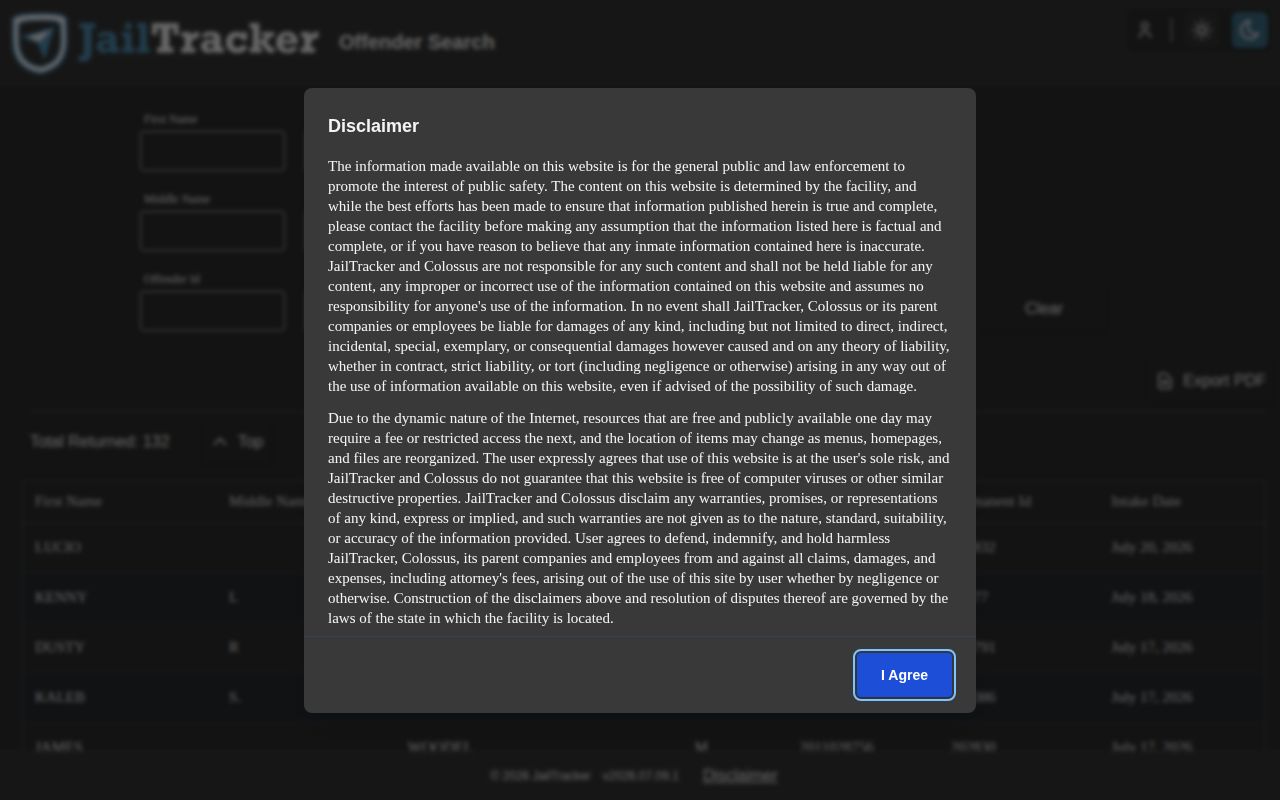
The captured interface does not provide a rolling Carter County 72-hour release record. Missing history must come from the jailer, court, VINE, or the authority responsible for a later custody stage.
Seventy-Two Hours in VINE
Kentucky VINE is an individual custody-status and notification service. It can show a location for a person in custody. The Kentucky Attorney General says a not-in-custody response can give a release date. A registration may send phone or email notice when the selected record changes. None of those functions creates a public Carter County three-day release roll.
The number 72 appears in VINE guidance for a different reason. For a scheduled release from a state institution, the system attempts notification about 72 hours before the expected event. That timing concerns advance notice for a known Kentucky DOC release. It is not a retrospective CCDC list, does not cover all county bond-outs, and does not prove that a planned release occurred.
Some legal or unplanned events may produce notice only after they happen. VINE also depends on agency data. Cross-check a result against CCDC and the controlling court or DOC record. A status message is not a certified discharge document.
Note: VINE's roughly 72-hour state-release notice and its 24-hour jail-call retry period describe alerts, not Carter County release-feed windows.
Route Carter Releases by Authority
CCDC housed people under several legal authorities in the dated Kentucky DOC snapshot cited by the research. That mixed setting explains why a three-day departure log, even if one existed, would not settle what happened next. Route each case by the authority that controlled the person after leaving the building.
| Departure path | Follow-up source | What to confirm |
|---|---|---|
| County bond or court release | CCDC, VINE, and Carter court | Release time, order, and community status. |
| State-sentence movement | KOOL and DOC Daily Releases | Institution, supervision status, and actual state release type. |
| Federal movement | BOP locator or federal docket | Whether CCDC departure was transfer or later federal release. |
| Immigration detainer handoff | ICE locator when applicable | Whether DHS custody followed the county release point. |
Little Sandy Correctional Complex is in Elliott County, not Carter County. Do not assume a nearby state institution is a local jail destination. Likewise, the Oklahoma Carter County sheriff website is unrelated to Carter County, Kentucky and must not be used for release claims.
Obtain Carter Three-Day Records
For a durable answer, ask the Carter County Jailer or detention center for an existing booking/release record. The official local contact is Carter County Detention Center, 13 Crossbar Road, Grayson, KY 41143, telephone 606-475-1606. No Carter-specific online request form, email, fee schedule, or posted response hours were verified, so call before sending.
Give the person's full name, date of birth if known, booking number if known, and the exact three-day range. Ask for booking and release timestamps, the recorded release disposition, releasing authority, and destination or transfer agency. Request an existing electronic copy. A narrow request reduces ambiguity and avoids asking staff to construct a report that does not already exist.
If state custody is involved, Kentucky DOC's Daily Releases PDFs can supply DOC number, name, release type, released-from institution, and highest felony class. Those PDFs cover DOC-managed releases, including some from local jails, but not every CCDC pretrial or misdemeanor exit. KOOL can then show the related state status or supervision.
The result should be a source-backed timeline, not a count inferred from a live roster. That approach remains useful even after the three-day window passes because agency and court records can outlast the web display.
Public Record Search
Sponsored Results